What it records, and where it comes from
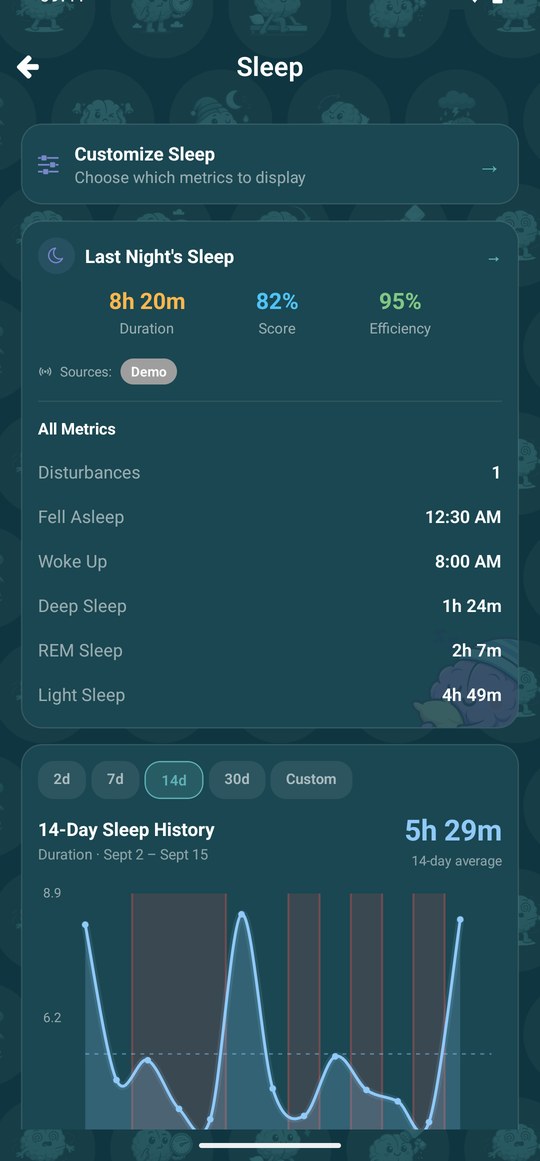
Duration, sleep score, efficiency, disturbances, deep, REM and light sleep, time in bed, and the times you fell asleep and woke up. Garmin, Oura and Polar connect directly; Apple Watch and other devices come through Apple Health or Health Connect. On Android, pick Phone as the source for sleep duration and timing in Data Settings and the app reads the longest screen-off gap between the evening and noon as your sleep. On iPhone, the phone cannot see that, so sleep needs Apple Health or a wearable. The Sleep Data screen also lets you enter or correct a night by hand.
 Sleep triggers that fire on their own
Bedtime late, wake time early, wake time late, sleep duration high, deep sleep high, REM sleep high and low, light sleep high and low, and sleep disturbances high and low are automatic triggers. Each fires when your night crosses its fixed line or moves two standard deviations from your own 14-day baseline, and each has a severity you control. A short night on its own is not an automatic trigger in the current catalogue; it still shows up in your patterns.
 Sleep in your patterns
What Happened ranks each sleep signal against your spins with the same statistics as every other trigger, and says in plain words whether it made a spin more likely for you. What's Helping shows the other side: the sleep habits that show up on your spin-free days.
Where it lives in the app
Monitor and then Sleep: last night at the top with duration, when you fell asleep and when you woke, then efficiency, disturbances, score and the deep, REM and light stages, and a 14-day history with your spin days marked.
What it needs from you
A wearable, Apple Health or Health Connect for stages and a score. On Android the phone can do the basics alone with usage access, reading the longest screen-off gap between evening and noon as your sleep, and typing a night in by hand works too.