
 The sodium counter
Sodium is not typed in; it comes from the foods you log. The home card sums today's sodium and shows it against 1,500 mg a day, labelled as the Meniere's target, with 2,000 mg as the upper-limit reminder. Under the target it says how many mg are left; over it, how far over. The target is a fixed reference, not adjusted per person, so use the number your clinician gave you as the one that counts.
 Add food in seconds
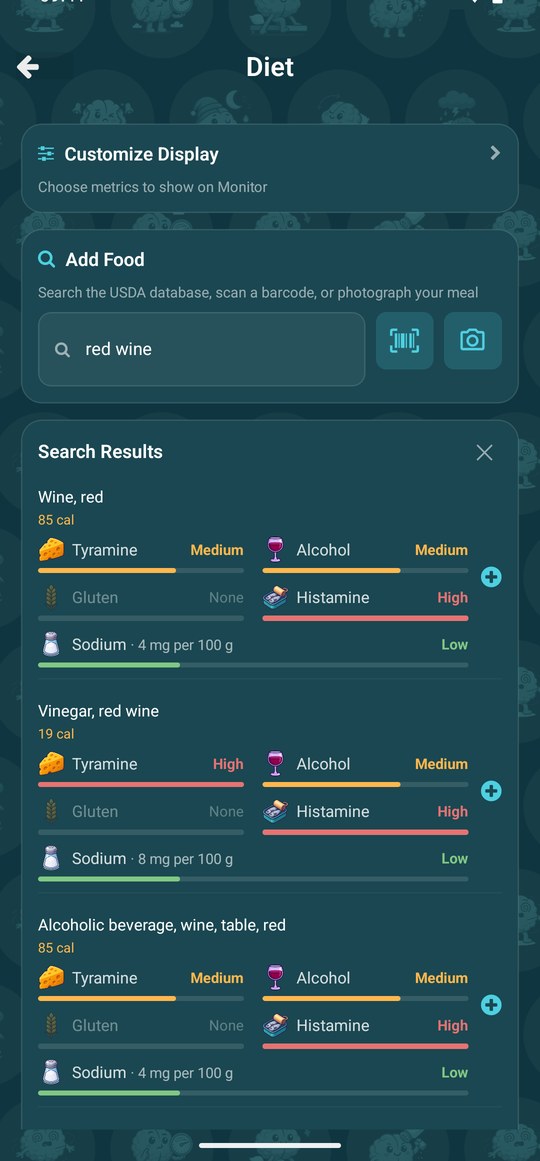
Search the USDA database or scan a barcode (Open Food Facts). Cheddar, a supermarket cracker, a glass of red: each comes back with calories, sodium, macros and, more usefully, with its tags. If you already log food elsewhere, Apple Health and Health Connect can pass nutrition through, but apps that only send daily totals cannot be tagged, so logging the food itself is more useful for trigger tracking.
 Caffeine, and the automatic sodium trigger
Caffeine, sugar, carbohydrates and a long list of nutrients are summed per day from what you log, and caffeine high and low fire as triggers on their own. A day over 3,000 mg of sodium, or far above your own two-week norm, logs a Sodium high trigger for you, and sodium is a first-class metric in Insights and Monitor, so What Happened can tell you whether high-sodium days actually go with your spins.
Tagged for tyramine, histamine, gluten and alcohol
Every result is marked Low, Medium or High for the four compounds. Tyramine, histamine and alcohol are the ones that come up most for vestibular migraine, and the daily maximums are triggers with the same statistics as everything else.
Where it lives in the app
Nutrition, reachable from Log and from Monitor. Sodium today sits at the top of Home as well, counting against the target, and the screen holds the food search and barcode scanner, today's log with caffeine, alcohol and sodium totalled, and the history with your spins marked.
What it needs from you
Whatever you can log, when you can. The tags and the statistics work with what is there and a gap is just a day without food data. The sodium card shows the 1,500 mg Meniere's target and the 2,000 mg upper limit and is not editable in the current app; there is no water counter, though hydration can arrive from a health platform and drinking water can be logged as a relief.